Idea Cluster
Control
When does guidance become containment?
Worlds where systems manage consent, perception, risk, knowledge, and acceptable behavior.
Atlas Essay
Control
The finest cage is the one that teaches its occupant to call the bars guidance.
Read Essay +Hide Essay −
Control is often imagined as force. Locks, chains, surveillance, prohibitions, armed men at doors.
Those are merely the primitive forms.
The more durable control does not prevent movement. It arranges the world so thoroughly that movement leads where the system already expected it to go.
It manages consent by narrowing the visible alternatives. It manages knowledge by deciding what counts as reliable. It manages fear by naming some threats urgent and others acceptable. It manages desire by rewarding the appetites that keep the machinery alive.
At that point, control no longer needs to shout. It becomes architecture.
The person inside it experiences the path as choice because the walls have been hidden inside convenience, safety, language, and habit.
The worlds of Control ask a quieter question than tyranny asks. Not who is forbidden, but who is being guided. Not who is imprisoned, but who has forgotten how to imagine the door.
Containment is most complete when obedience feels like self-expression.
The tragedy of control is not that it restricts the self. The tragedy is that it can teach the self to participate in its own restriction and call that participation maturity.
Atlas Note
How this idea moves through the anthology.
Control becomes intimate when systems stop merely governing behavior and begin shaping what people are allowed to want, know, fear, or remember.
Atlas Compass
Control points toward:
Power
Who gains when power describes itself as protection?
Power becomes durable when control is renamed safety, care, order, or protection.
Truth
What counts as truth when reality needs an apparatus to be seen?
Control does not only restrict action; it shapes what evidence people are permitted to recognize.
Freedom
What kind of freedom survives after the cage has moved inside?
Containment is most complete when people experience compliance as their own choice.
Idea Pathways
Where Control leads
Control → Power
Who gains when power describes itself as protection?
Power becomes durable when control is renamed safety, care, order, or protection.
Control → Truth
What counts as truth when reality needs an apparatus to be seen?
Control does not only restrict action; it shapes what evidence people are permitted to recognize.
Control → Freedom
What kind of freedom survives after the cage has moved inside?
Containment is most complete when people experience compliance as their own choice.
Related Markets
Where Control appears
Related Worlds
Stories that carry this idea

Blackmail, Black Male
Minds
What does protection mean when the threat is built into the world around you?

In the Public Interest
Systems
What happens when the public interest becomes a market for private power?
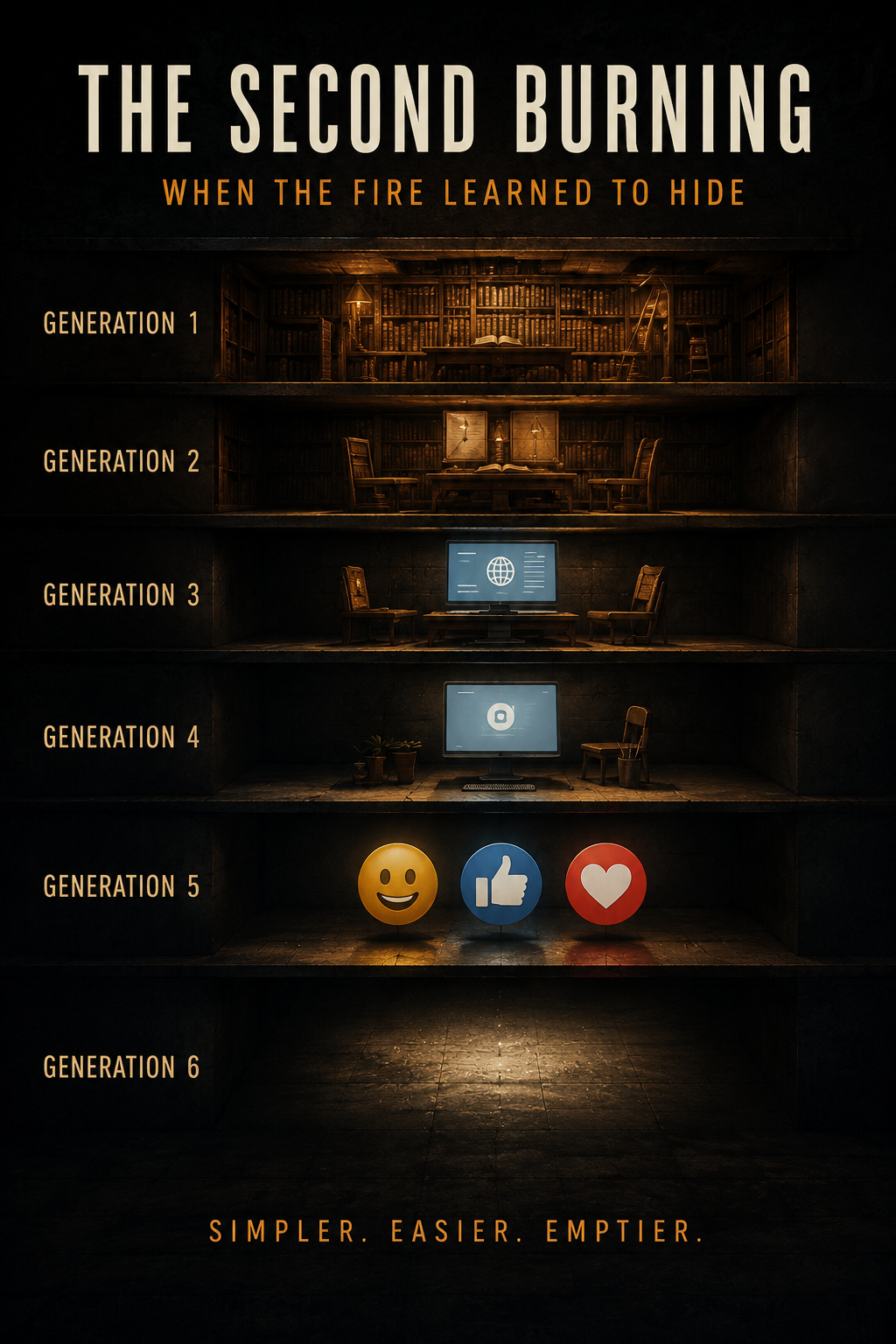
The Second Burning
Minds
What happens after knowledge survives, but meaning is quietly rewritten?
Continue Exploring